
In 2026, hyperscaler AI capex is running toward roughly $720–830B, U.S. Data-center construction has cleared a $50B annualized pace, and AI-related investment is contributing on the order of 1–1.5 percentage points to U.S. GDP growth. Rates are still sticky near 3.6%. Canada and Mexico ride different capacity curves, with Querétaro inventory up about 450% YoY.
North America's 2026 growth story is no longer only consumers and housing. It is increasingly a compute and construction story: GPUs, servers, software, power gear, and the shells that hold them. Private U.S. Data-center construction hit a seasonally adjusted annual rate of about $50.7 billion in April 2026, the first print above $50B since the Census Bureau broke the category out. That is physical spend you can see in the national accounts, not just a slide in an earnings deck.
On the tech side, the dollar figures are larger still. TrendForce (May 2026) lifted its forecast for combined 2026 CapEx at the world's top nine cloud providers to roughly $830 billion (~79% YoY), with North American CSPs leading the revisions: AWS expected above $230B, Microsoft around $190B, Google in the $180–190B range, and Meta at $125–145B. Separate market tallies of the Big Four / hyperscaler complex cluster nearer $720–750B for 2026. Different scopes, same message: AI infrastructure is a macro variable.
How much does that move GDP? Gross estimates for AI-related investment (equipment, software, data centers, and power) put the contribution around ~1.0 to 1.5 percentage points of U.S. Real GDP growth in early 2026, against a Q1 print near ~2.0% annualized. Net of imports of chips and servers, the domestic boost is smaller, often closer to half of the gross figure. Bridgewater-style work has put the 2026 AI-capex growth impulse in a similar ~140 bp neighborhood. Strip out the AI buildout and the U.S. Expansion looks much thinner.
Rates stay sticky. This is not a 2021 cheap-money boom. Mid-2026 FOMC minutes coverage put the policy rate near 3.6%, with officials split on whether year-end would be lower or higher. Many participants flagged strong AI-infrastructure demand as a channel that can keep pressure on tech-goods and electricity prices. AP and other reporting have put industry AI infrastructure spend on a path to top $700B this year for the same reason. So the opportunity is not “rates are zero, leverage everything.” It is that hyperscaler cash flow, multi-year power contracts, and strategic necessity can still clear a higher cost of capital than a typical software growth story.
Power is the binding constraint. TrendForce expects global data-center installed power capacity near ~155 GW in 2026 (~+29% YoY), with AI servers set to consume more electricity than general-purpose servers this year. The IEA's Electricity Mid-Year Update 2026 sees global electricity demand rising about 3.6% in 2026 (then ~3.8% in 2027), with data centers among the structural drivers. Bessemer Trust notes the U.S. Still holds roughly ~40% of global data-center capacity, with thousands of sites live and more than 2,500 in development. If you sell cooling, electrical, HVDC, liquid cooling, grid interconnection, or energy storage, you are selling into the bottleneck, not a side quest.
United States. Deepest demand pool: hyperscale live capacity, semiconductor pull-through, construction, utilities, and ops software. Growth shows up first in equipment orders and GDP. Map who pays for your widget in the hyperscale bill of materials before you assume “AI” alone is a buyer.
Canada. Smaller base, faster percentage growth on a much lower GW starting point (industry North America outlooks have put live capacity near ~1.6 GW). Bank of Canada research has been building satellite-style measures of an “AI economy” as compute spend and quality-adjusted output rise. Scotiabank scenarios still show the U.S. Capturing larger level gains into the early 2030s because it builds more of the physical stack. Canadian adjacency plays: energy and renewables, cold-climate and land positioning, talent, and enterprise AI adoption that can ride U.S. Compute when local racks lag.
Mexico / Querétaro. CBRE's Global Data Center Trends 2026 (via BNamericas, June 2026) put Querétaro wholesale inventory at 298.2 MW, up 450.2% YoY, making it Latin America's fastest-growing core market. Vacancy was about 10.6% with 31.5 MW available, consistent with heavy pre-leasing. The four core LATAM markets (São Paulo, Querétaro, Santiago, Bogotá) reached 1,045 MW combined (+41.3% YoY). CloudHQ's announced Querétaro campus, at about $4.8B with readiness targeted into 2027 and major private substation / grid work, is the kind of check that turns a state into a corridor story. Power availability remains the gate: developers increasingly need utility coordination or self-generation. Nearshoring manufacturers need local digital infrastructure as U.S. Capacity stays tight.
Put the triangle together and you get a North American AI infrastructure economy: U.S. Demand and chip/software profits, Canadian energy and talent optionality, Mexican land/labor/nearshore digital buildout centered on hubs like Querétaro. GDP prints will look uneven. The opportunity set is shared: construction and MEP, power and storage, connectivity, security and compliance, vertical SaaS for facilities, and advisory for buyers who need to diligence vendors, offtake, and cross-border execution.
My View on This
Treat AI data centers as industrial policy you can sell into, not only as a tech headline. In sticky-rate 2026, underwrite cash-flow quality and power access before you underwrite hype. For U.S. Teams, map the hyperscale BOM. For Canada, lean into energy, talent, and enterprise adoption. For Mexico, especially Querétaro and the Bajío, pressure-test grid timelines as hard as land deals. If you raise, buy, or partner across the corridor, ask one question early: does this business win if AI capex stays hot when rates do not go back to zero?
Sources
- TrendForce via PR Newswire, May 6, 2026: top-nine CSP CapEx ~$830B. U.S. CSP guidance. ~155 GW global DC power capacity
- Axis Intelligence / U.S. Census C30: private data-center construction ~$50.7B SAAR (April 2026)
- Bessemer Trust: AI capex cycle, ~1.5 ppt Q1 2026 GDP contribution (gross), U.S. ~40% of global DC capacity
- AP News: AI buildout, ~$700B+ spend path, inflation and Fed rate risk (2026)
- FOMC minutes coverage (June 2026 meeting): policy rate near 3.6%. AI infra as tech/electricity price pressure
- IEA Electricity Mid-Year Update 2026: global electricity demand +3.6% in 2026
- BNamericas / CBRE Global Data Center Trends 2026: Querétaro 298.2 MW, +450.2% YoY
- CloudHQ Querétaro campus announcement coverage (~$4.8B. Readiness into 2027)
- Bridgewater, The Macro Implications of the AI Capex Boom
- Scotiabank Economics, The AI Shock (June 2026)
- Bank of Canada, Measuring the AI Economy (SWP 2026-20)
Related Articles
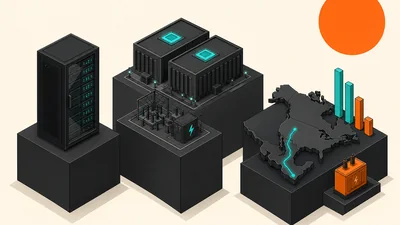
Querétaro's Data Center Map: CloudHQ, Kio, Plan México, and the US-MX Bargain
Who is actually building in Querétaro (CloudHQ, Kio, ODATA, AWS, Microsoft, Equinix, Ascenty, Scala, Layer 9), what Plan México can fund, and the FDI and power numbers that tie the U.S. And Mexico together.
The AI Deal Tape: Anthropic, OpenAI, Stripe-OpenRouter, and Dario's Three Points
Anthropic is closer to listing than OpenAI. Stripe has reportedly agreed to buy OpenRouter for more than $7B. Dario Amodei's August 15 posts are the policy tone buyers should actually underwrite: harder tests at the frontier, fewer slogans, and an admission that the big benefits are still unpaid.
Zuckerberg’s Case for Fair AI: Why The Future Is for Everyone Matters
Mark Zuckerberg’s The Future Is for Everyone stakes Meta’s AI philosophy on equality, personal empowerment, and broad access. Here is the short take, plus Meta’s latest AI moves since 2025: Scale AI, Manus, Play AI, and the OpenClaw / Peter Steinberger episode.